

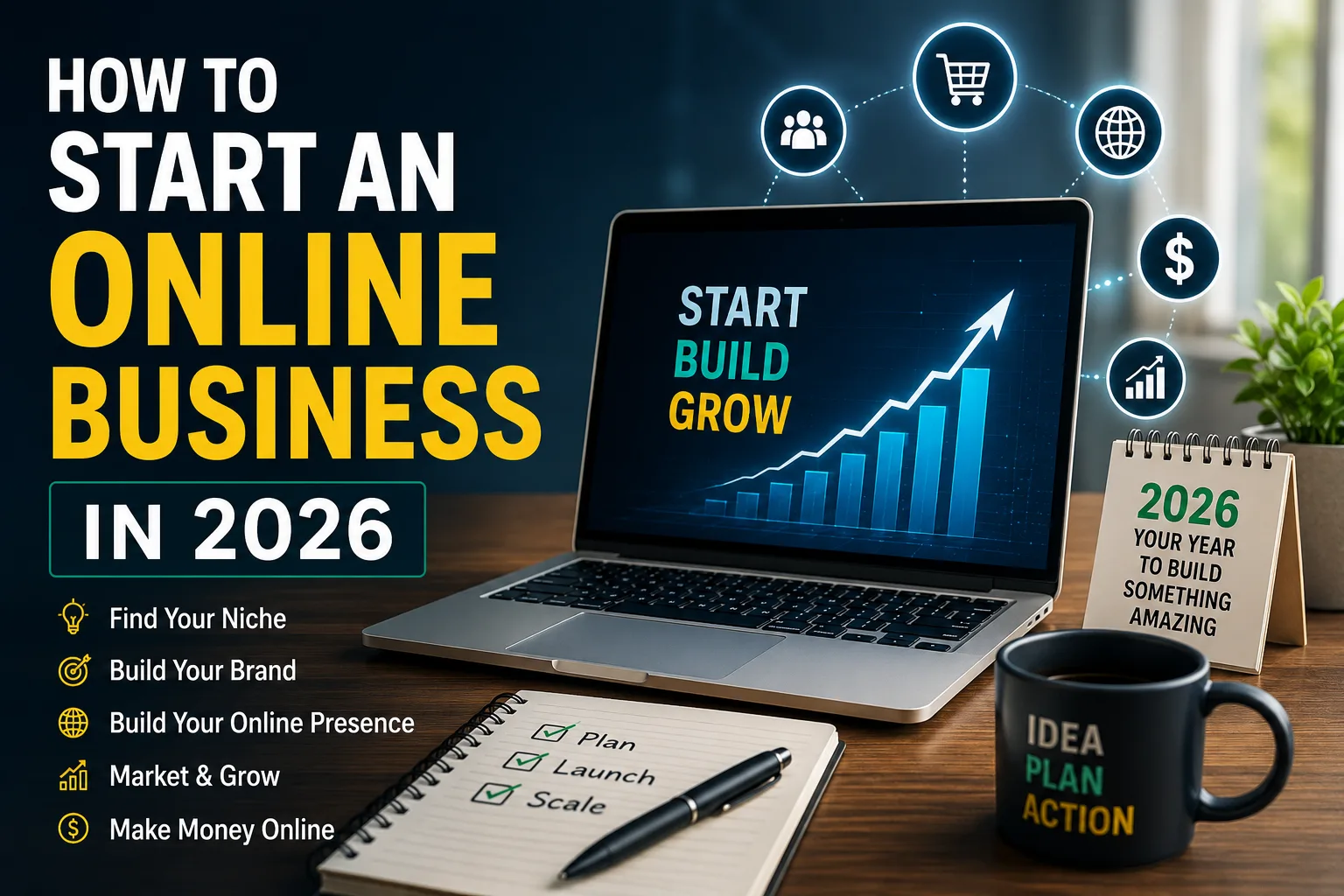
Starting an online business has become one of the fastest ways to build a sustainable income, reach customers worldwide, and create long-term business growth. Advances in artificial intelligence, eCommerce platforms, digital payments, and automation have lowered the barriers for entrepreneurs.
Whether you’re a learner exploring entrepreneurship, a startup owner launching your first venture, or a marketer looking to expand digitally, understanding how to build an online business from the ground up is essential.
This guide explains every major step, highlights current industry trends, shares practical examples, and outlines common mistakes to avoid.
Why Online Business Continues to Grow
Digital transformation has changed how people shop, learn, and communicate. Consumers increasingly prefer buying products and services online because of convenience, competitive pricing, and faster delivery.
Several factors are driving this growth:
- Rising internet penetration
- Mobile-first shopping behavior
- AI-powered customer support
- Digital payment adoption
- Growth of remote work
- Global access to customers
Businesses no longer need expensive office spaces or retail stores to reach their audience.
For many startup owners, an online business offers a lower investment compared to traditional businesses.
What is an Online Business?
An online business is any business that primarily operates through the internet. Products, services, marketing, customer support, and payments happen digitally.
Examples include:
- eCommerce stores
- SaaS companies
- Digital marketing agencies
- Online coaching
- Freelancing
- Affiliate marketing
- Subscription businesses
- Digital product creators
The business model depends on your expertise, investment, and target audience.
Benefits of Starting an Online Business
Lower Startup Cost
Most online businesses require significantly less capital than physical businesses.
Global Reach
Your customers are not limited by geography.
Flexible Operations
You can work remotely while managing teams across different locations.
Easier Automation
Modern tools automate:
- Email marketing
- Customer support
- Inventory
- Accounting
- Scheduling
- CRM
Data-Driven Decisions
Analytics platforms help monitor:
- Website traffic
- Customer behavior
- Sales performance
- Marketing ROI
Choosing the Right Business Model
Different business models suit different goals.
| Business Model | Investment | Scalability | Skill Requirement |
| eCommerce | Medium | High | Medium |
| Freelancing | Low | Medium | High |
| Digital Products | Low | High | Medium |
| Affiliate Marketing | Low | High | Medium |
| SaaS | High | Very High | High |
| Online Coaching | Low | High | High |
Choosing the right model depends on your experience, available resources, and long-term vision.
Step 1: Identify a Profitable Niche
Many businesses fail because they try to target everyone.
Instead, focus on solving one specific problem.
Examples include:
- Fitness for working professionals
- AI productivity tools
- Small business accounting
- Home office equipment
- Sustainable fashion
- Pet accessories
A niche allows you to build authority faster.
Step 2: Validate Your Business Idea
Before investing money, confirm market demand.
Research:
- Customer pain points
- Existing competitors
- Search volume
- Product demand
- Pricing expectations
Useful validation methods include:
- Online surveys
- Social media communities
- Keyword research
- Customer interviews
- Landing pages
Validation reduces business risk.
Step 3: Create a Business Plan
A business plan doesn’t need to be lengthy.
Include:
- Business objective
- Target audience
- Revenue model
- Marketing strategy
- Budget
- Financial projections
- Growth roadmap
Planning helps prioritize resources effectively.
Step 4: Build Your Website
Your website acts as your digital headquarters.
Important pages include:
- Home
- About
- Services
- Products
- Blog
- Contact
- Privacy Policy
A professional website should offer:
- Fast loading speed
- Mobile responsiveness
- Secure payment options
- Clear navigation
- SEO optimization
User experience directly impacts conversions.
Step 5: Build Your Brand
Branding extends beyond a logo.
Strong brands communicate:
- Mission
- Values
- Personality
- Consistency
- Customer trust
Maintain consistency across:
- Website
- Social media
- Email campaigns
- Packaging
- Customer support
Trust drives repeat customers.
Step 6: Create Valuable Content
Content marketing attracts visitors without relying entirely on paid advertising.
Create:
- Blog articles
- Videos
- Infographics
- Case studies
- Email newsletters
- Industry reports
Focus on solving customer problems rather than selling.
Helpful content builds long-term authority.
Step 7: Optimize for Search Engines
SEO remains one of the highest ROI marketing channels.
Important SEO practices include:
Keyword Research
Target keywords like:
- Online Business
- business ideas
- startup owner
- online entrepreneurship
- digital business
Technical SEO
Improve:
- Site speed
- Mobile performance
- HTTPS security
- Crawlability
On-Page SEO
Optimize:
- Headings
- Internal links
- Images
- Meta tags
Content Quality
Publish comprehensive articles that answer user intent.
Search engines increasingly reward helpful content.
Step 8: Use Social Media Strategically
Not every platform fits every business.
Choose platforms where your audience spends time.
Examples:
- LinkedIn for B2B
- Instagram for lifestyle brands
- YouTube for education
- Facebook for local communities
- X for industry conversations
Consistency matters more than posting everywhere.
Step 9: Build an Email List
Email remains one of the highest-converting digital marketing channels.
Offer valuable incentives:
- Free guides
- Templates
- Checklists
- Webinars
- Discounts
Email helps nurture relationships and increase repeat purchases.
Step 10: Measure and Improve
Successful businesses constantly analyze performance.
Track:
- Organic traffic
- Conversion rate
- Customer acquisition cost
- Bounce rate
- Average order value
- Customer lifetime value
Use insights to improve marketing campaigns.
Latest Trends Shaping Online Business in 2026
The online business landscape continues to evolve rapidly.
Artificial Intelligence
AI assists with:
- Customer support
- Product recommendations
- Content creation
- Marketing automation
- Sales forecasting
Voice Search
More users search using voice assistants.
Content should answer conversational questions naturally.
Video Commerce
Short-form videos increasingly influence purchase decisions.
Subscription Economy
Recurring revenue models provide predictable business growth.
Personalization
Consumers expect customized shopping experiences based on preferences.
Common Mistakes Beginners Make
Avoid these mistakes:
- Choosing a niche without research
- Ignoring SEO
- Depending only on paid ads
- Poor customer support
- Weak branding
- No email marketing
- Inconsistent publishing
- Skipping analytics
Small improvements compound over time.
Real-World Examples
Many global businesses began online before expanding internationally.
Examples include:
- Amazon started as an online bookstore.
- Shopify helped thousands of small businesses launch digital stores.
- Canva grew by simplifying graphic design for non-designers.
- Notion built a loyal user base through content marketing and community engagement.
These companies focused on solving specific customer problems before scaling.
Actionable Tips for Learners and Startup Owners
If you’re beginning your online business journey:
- Start with one niche.
- Build a professional website.
- Learn basic SEO.
- Publish useful content regularly.
- Focus on customer experience.
- Build an email audience.
- Measure results every month.
- Improve based on customer feedback.
- Automate repetitive tasks.
- Continue learning industry trends.
Consistency usually beats perfection.
Key Takeaways
- Online businesses require planning, research, and consistent execution.
- SEO remains one of the strongest long-term growth strategies.
- AI and automation improve productivity but do not replace customer trust.
- Valuable content attracts qualified visitors.
- Strong branding increases credibility.
- Continuous learning helps businesses stay competitive.
Conclusion
Starting an online business in 2026 offers significant opportunities for entrepreneurs, learners, marketers, and startup owners. Digital technology has reduced startup costs while expanding access to global markets. Success, however, depends on more than launching a website. It requires identifying a real customer problem, choosing the right business model, building trust through valuable content, and continuously improving based on data.
Looking ahead, artificial intelligence, automation, personalization, and data-driven marketing will shape the next generation of digital businesses. Entrepreneurs who combine these technologies with strong customer relationships, ethical practices, and long-term thinking will be better positioned for sustainable growth.
Whether you’re launching your first venture or expanding an existing brand, focus on delivering consistent value. Businesses that solve meaningful problems and adapt to changing customer expectations are more likely to thrive in the years ahead.
FAQs
1. What is the best online business to start in 2026?
Some of the most promising options include eCommerce, digital marketing agencies, online coaching, SaaS products, affiliate marketing, and selling digital products. The right choice depends on your skills, budget, and target audience.
2. How much money do I need to start an online business?
Many online businesses can be started with a modest investment for a domain, hosting, website, and marketing. Service-based businesses often require less upfront capital than product-based businesses.
3. How important is SEO for an online business?
SEO is one of the most effective long-term marketing strategies. It helps attract organic traffic, improve search visibility, reduce advertising costs, and generate qualified leads over time.
4. How long does it take for an online business to become profitable?
The timeline varies by industry, business model, and marketing strategy. Some businesses generate revenue within a few months, while others take a year or more to build sustainable profitability.
5. What skills should a learner or startup owner develop first?
Focus on market research, basic SEO, content marketing, website management, customer communication, analytics, and digital marketing fundamentals. These skills create a strong foundation for long-term business growth.