

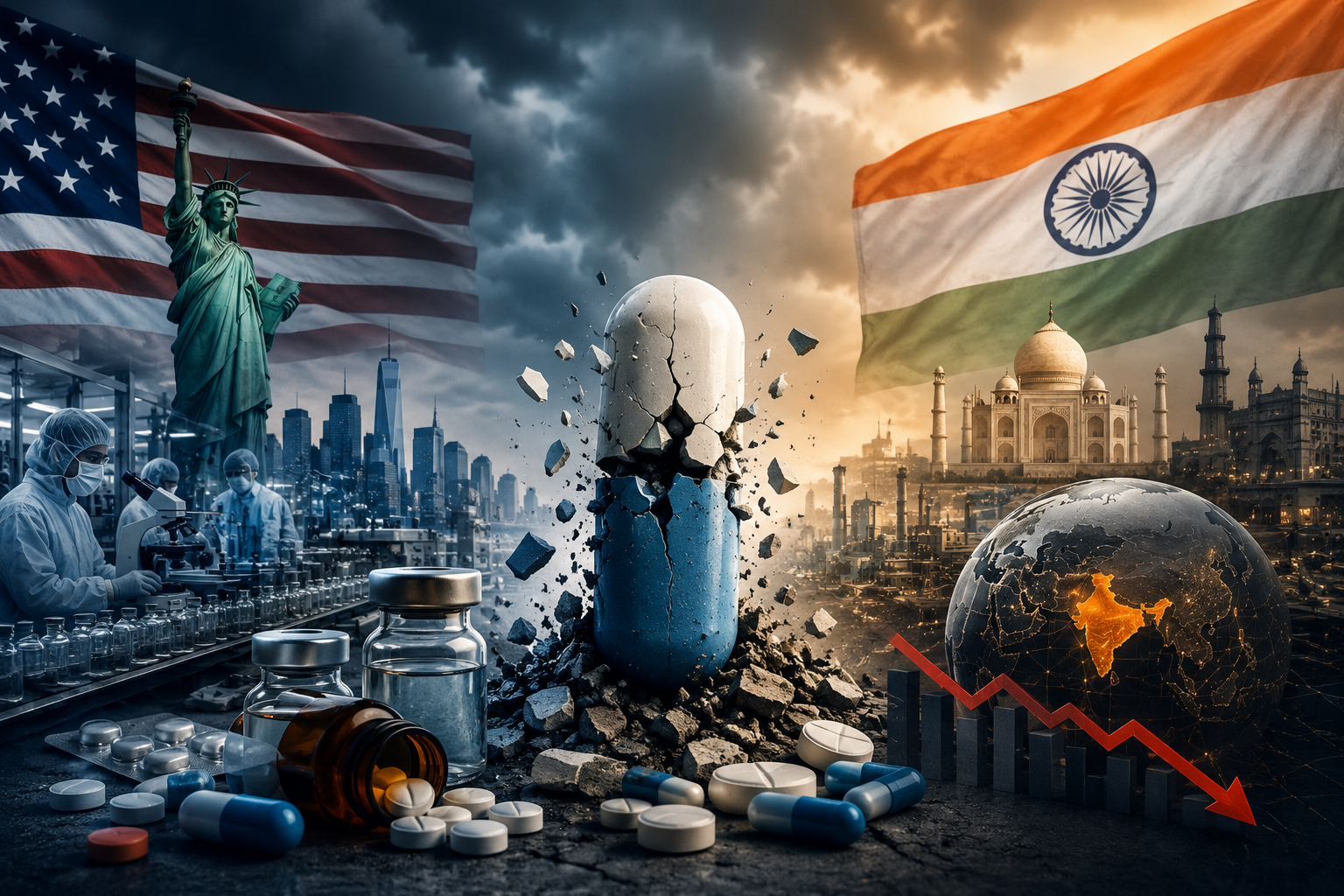
The global pharmaceutical industry is facing one of its toughest periods in recent years. Rising trade tensions, regulatory instability, supply chain disruptions, and pricing pressures have created a “twin crisis” for pharma companies worldwide. The impact is especially visible in the healthcare systems of the United States and India, two countries deeply connected through medicine production and exports.
The USA depends heavily on imported generic medicines and active pharmaceutical ingredients (APIs), while India is known as the “pharmacy of the world” because it supplies affordable generic drugs globally. Any disruption between these two markets can directly affect millions of patients, hospitals, and healthcare providers.
According to recent industry reports, the U.S. administration introduced aggressive pharmaceutical tariff policies in 2025–2026, including a proposed 100% tariff on patented drug imports. At the same time, the U.S. Food and Drug Administration (FDA) has experienced leadership instability and staff layoffs, increasing uncertainty in the sector.
Understanding the Twin Crises in the Pharma Industry
The current pharmaceutical crisis is driven by two major challenges:
1. Global Supply Chain Disruptions
Pharma supply chains became highly vulnerable after the COVID-19 pandemic. Drug companies across the world still rely heavily on international sourcing for APIs, packaging materials, and manufacturing.
Recent tariff policies and geopolitical tensions have further increased the pressure. Industry experts warn that stricter import duties and trade barriers may lead to:
- Medicine shortages
- Delayed drug production
- Higher manufacturing costs
- Reduced availability of essential medicines
A recent report stated that U.S. tariff measures could create “shockwaves across the pharmaceutical value chain.”
2. Drug Pricing and Regulatory Pressure
The second crisis involves rising pressure on drug pricing and regulatory compliance.
The U.S. government has been pushing for lower medicine prices through policies linked to international pricing benchmarks. Meanwhile, pharmaceutical companies argue that uncertain regulations and sudden policy changes are making innovation and investment more difficult.
This combination of pricing pressure and unstable regulation is creating serious financial stress for pharmaceutical firms globally.
Why the USA Is Highly Vulnerable
The United States is one of the world’s largest pharmaceutical markets, but it depends heavily on imported medicines and ingredients.
Reports suggest that nearly 90% of prescriptions in the U.S. are generic drugs, many of which are supplied by Indian manufacturers.
In addition:
- More than half of several critical medicines consumed in the U.S. rely on foreign supply chains.
- China and India remain major suppliers of APIs and finished drugs.
- Hospital systems already face shortages of certain injectable medicines.
This dependence means that any disruption in global pharmaceutical trade could directly affect American healthcare.
Possible Impact on the Health of the USA
Rising Drug Prices
If tariffs on pharmaceutical imports continue to increase, American consumers may face significantly higher medicine costs.
Experts warn that tariffs can raise:
- Prescription drug prices
- Hospital treatment expenses
- Insurance premiums
- Out-of-pocket healthcare costs
A recent analysis highlighted that increased import duties could push companies to pass higher costs to patients.
For millions of Americans already struggling with expensive healthcare, this could worsen access to treatment.
Shortage of Essential Medicines
The USA may also experience shortages of critical medicines if imports slow down.
This is especially concerning for:
- Cancer drugs
- Diabetes medicines
- Cardiovascular treatments
- Antibiotics
- Injectable hospital drugs
Healthcare experts fear that low-profit generic medicines could disappear from the market if manufacturing costs become unsustainable.
Delays in Drug Innovation
Regulatory instability at the FDA may also affect the approval of new medicines.
Recent leadership exits and staff reductions at the FDA have raised concerns among pharmaceutical companies about slower approval processes and uncertainty in clinical research.
This could delay access to innovative treatments for American patients.
Impact on Hospitals and Healthcare Providers
Hospitals in the U.S. are already under financial pressure. Rising pharmaceutical costs may further increase operational expenses.
Hospitals may need to:
- Reduce medicine inventories
- Delay procurement
- Seek alternative suppliers
- Increase treatment costs
This could especially affect smaller healthcare facilities and rural hospitals.
How India Is Connected to the Crisis
India plays a critical role in the global pharmaceutical industry.
According to industry estimates:
- India supplies approximately 20% of the world’s generic medicines
- The country has over 10,500 manufacturing facilities
- India exported nearly US$9.7 billion worth of pharmaceutical products to the U.S. in FY 2024–25
India also has the largest number of U.S. FDA-approved pharmaceutical plants outside the United States.
Because of this strong connection, any disruption in U.S. pharma policies directly affects Indian pharmaceutical companies.
Impact on India’s Healthcare and Pharma Sector
Pressure on Pharma Exports
The U.S. is one of the biggest markets for Indian pharma companies.
Although generic medicines currently remain exempt from some tariff measures, uncertainty still affects investor confidence and export planning.
Indian companies may face:
- Reduced export margins
- Compliance challenges
- Currency fluctuations
- Increased manufacturing costs
Smaller pharma firms may struggle the most.
Higher Manufacturing Costs
India imports several raw materials and APIs from China. If global supply chains become unstable, Indian drug manufacturers could also face rising production costs.
This may increase prices for:
- Generic medicines
- Over-the-counter drugs
- Essential healthcare products
Eventually, Indian consumers may also experience higher healthcare expenses.
Risk to Affordable Healthcare
India is known for affordable medicines. However, increasing production and export costs could challenge this advantage.
If pharma companies focus more on export profits and international compliance costs, domestic medicine pricing may rise.
This could impact:
- Low-income patients
- Government healthcare programs
- Rural healthcare systems
Affordable healthcare access may become more difficult for vulnerable populations.
Opportunities for Indian Pharma Companies
Despite the challenges, the crisis also creates opportunities for India.
As global companies seek alternatives to China-based supply chains, India could strengthen its position as a trusted pharmaceutical manufacturing hub.
Several international firms are already exploring:
- Diversified supply chains
- Partnerships with Indian manufacturers
- Long-term sourcing agreements
Experts believe India could benefit if it improves:
- API self-reliance
- Regulatory standards
- Manufacturing infrastructure
- Research and innovation
What Pharma Companies Are Doing
Pharmaceutical firms globally are responding aggressively to the crisis.
Reports show that major companies have announced billions of dollars in manufacturing investments in the United States.
Some companies are:
- Building new production facilities
- Increasing inventory stockpiles
- Diversifying suppliers
- Investing in AI-driven supply chain systems
The goal is to reduce dependence on single-country sourcing and improve resilience.
Long-Term Outlook for the Global Pharma Industry
The pharmaceutical sector is entering a period of transformation.
The future may include:
- Regional manufacturing hubs
- Increased healthcare nationalism
- More government intervention
- Higher focus on supply chain security
While these changes may improve long-term resilience, the short-term impact could include:
- Higher medicine prices
- Healthcare inflation
- Drug shortages
- Slower innovation
Both the USA and India must work together to maintain stable pharmaceutical trade and ensure patient access to affordable medicines.
Conclusion
The ongoing twin crises in the pharmaceutical industry are more than just a business problem. They represent a serious global healthcare challenge.
For the United States, the risks include rising drug prices, medicine shortages, and regulatory instability. For India, the crisis may impact exports, manufacturing costs, and affordable healthcare access.
However, the situation also creates opportunities for stronger supply chains, better manufacturing infrastructure, and greater global cooperation.
As healthcare systems continue to evolve in 2026 and beyond, governments and pharmaceutical companies must balance trade policies, innovation, and patient affordability carefully. The decisions made today could shape the future of global healthcare for decades.