

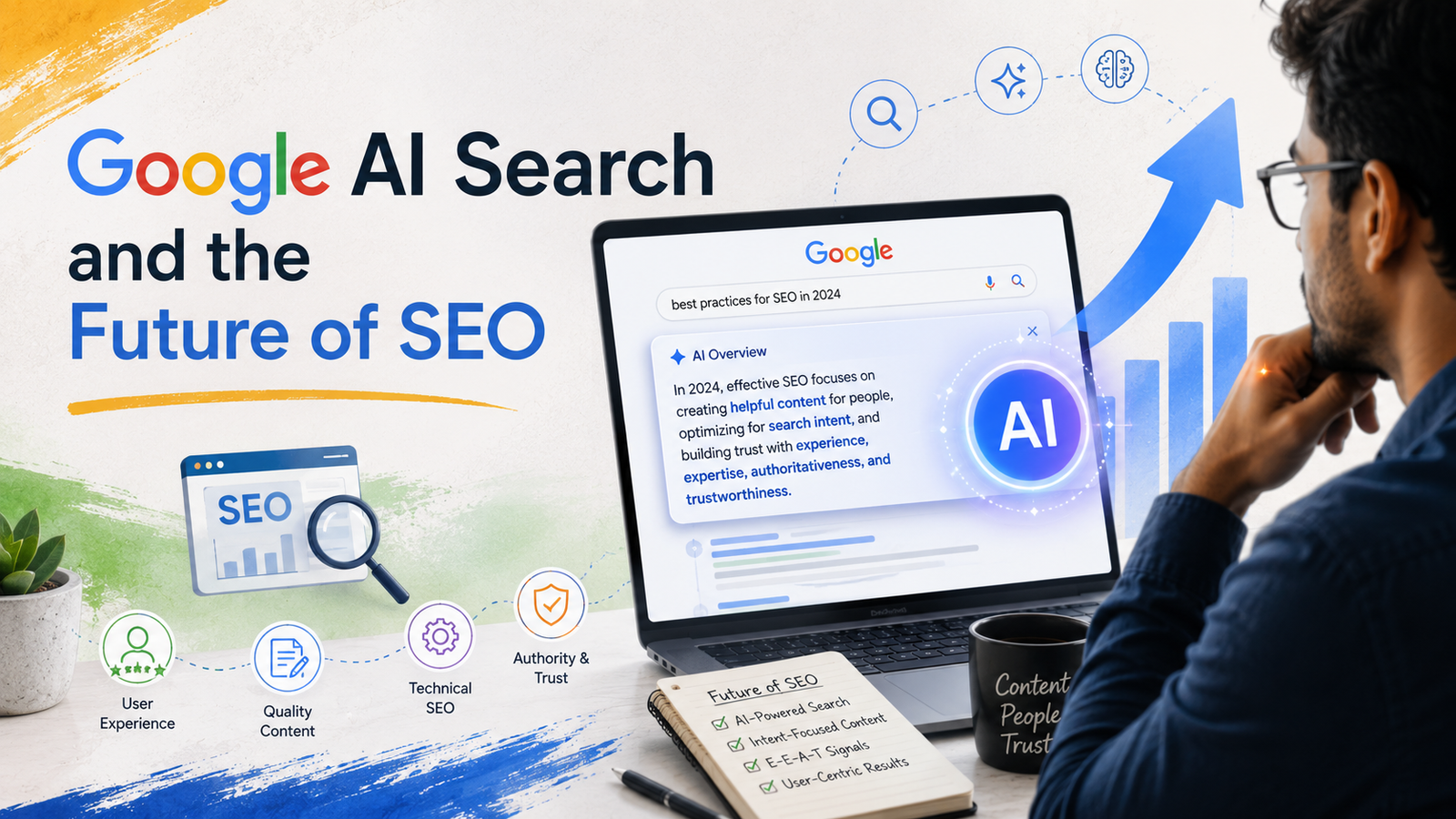
Google AI Search is reshaping how people discover information online. Search engines are moving beyond traditional blue links and becoming AI-powered answer engines that understand context, intent, and user behavior.
For marketers, businesses, and digital marketing professionals, this shift marks one of the most significant changes in the history of search. The rise of AI-driven search experiences is forcing brands to rethink content strategy, technical optimization, and how they build authority online.
In this article, we will examine how Google AI Search works, what it means for AI SEO, and why GEO is becoming a critical strategy for future visibility.
What Is Google AI Search?

Google AI Search refers to the company’s AI-enhanced search experience that uses advanced language models to generate summarized answers, recommendations, and contextual insights directly within search results.
Key features include:
-
AI-generated overviews
-
Conversational search capabilities
-
Context-aware results
-
Multimodal search using text, images, and voice
-
Personalized search experiences
This evolution is largely driven by technologies such as Google Gemini and other large language models integrated into Google’s search ecosystem.
Why Google AI Search Matters for SEO

Traditional SEO focused heavily on:
-
Keyword rankings
-
Backlinks
-
Meta tags
-
Technical optimization
-
Content relevance
These factors still matter, but AI-powered search introduces new ranking considerations.
The new question is no longer “How do I rank?”
It is “How do I become the source AI chooses to cite?”
Traditional SEO vs AI SEO
|
Factor |
Traditional SEO |
AI SEO |
|---|---|---|
|
Focus |
Keywords |
User intent & context |
|
Results |
Blue links |
AI-generated answers |
|
Content |
Keyword optimized |
Entity and topic optimized |
|
Authority |
Backlinks |
Brand trust & citations |
|
User Experience |
Website focused |
Search experience focused |
|
Optimization |
Search engines |
Generative engines |
The Rise of GEO: Generative Engine Optimization

One of the fastest-growing concepts in digital marketing is Generative Engine Optimization.
GEO focuses on optimizing content so AI systems can:
-
Understand it clearly
-
Trust it
-
Reference it in generated responses
-
Present it to users as an authoritative source
How GEO Differs From SEO
SEO helps search engines index your content.
GEO helps AI engines use your content in answers.
This distinction is becoming increasingly important as AI-generated search results occupy more screen space.
How AI Is Changing the Search Experience

The modern search experience is becoming:
-
Conversational
-
Predictive
-
Personalized
-
Visual
-
Instant
For example, instead of searching “best CRM software,” users might ask:
“What is the best CRM for a 20-person startup with a limited budget?”
Google AI Search can generate a direct comparison and recommendation.
This means businesses must create content that answers specific, real-world questions.
Latest Industry Trends in Google AI Search

Several major trends are shaping the future of search.
1. AI Overviews Are Expanding
Google continues to expand AI-generated summaries across more search queries.
This reduces clicks for some informational searches while increasing the importance of being cited in AI responses.
2. Entity-Based SEO Is Growing
Google increasingly understands entities rather than just keywords.
Examples of entities:
-
OpenAI
-
Google
-
Microsoft
-
Search Engine Optimization
-
Generative AI
Strong entity associations improve visibility.
3. E-E-A-T Is More Important Than Ever
Google continues emphasizing:
-
Experience
-
Expertise
-
Authoritativeness
-
Trustworthiness
AI systems rely heavily on trusted sources.
Real-World Example: AI SEO in Action

Consider a cybersecurity company.
Old approach:
-
Create a keyword-focused article
-
Build backlinks
-
Target “best cybersecurity software”
New AI SEO approach:
-
Publish expert-written guides
-
Include original research
-
Add case studies
-
Answer specific questions
-
Build brand authority
-
Structure content for AI understanding
The second approach has a much higher chance of being referenced by AI search systems.
Actionable AI SEO Strategies for Businesses

1. Focus on Topical Authority
Cover entire subject areas instead of isolated keywords.
Example topic cluster:
-
AI SEO basics
-
GEO strategies
-
AI content optimization
-
Search experience trends
-
Future of search
2. Answer Questions Clearly
Use:
-
FAQs
-
How-to sections
-
Step-by-step explanations
-
Comparison tables
3. Build Brand Signals
AI systems look for:
-
Brand mentions
-
Expert authors
-
Industry citations
-
Media coverage
-
Positive reputation
4. Optimize for Multimodal Search

Use:
-
High-quality images
-
Descriptive alt text
-
Video content
-
Structured data
-
Voice-search-friendly content
What Businesses Should Expect in the Next 5 Years

Search is likely to become increasingly AI-driven.
Expected developments:
-
More conversational search
-
Fewer traditional clicks
-
Greater personalization
-
AI shopping recommendations
-
Voice-first search growth
-
Real-time AI assistance
Businesses that adapt early will gain a significant competitive advantage.
Key Statistics Marketers Should Know
Google processes billions of searches daily
Source: Google
AI-generated search features are expanding globally
Source: Industry reports
Voice search adoption continues to rise
Source: Market research
Users increasingly prefer direct answers over multiple search results
Source: Search behavior studies
Biggest Mistakes to Avoid

Many businesses are making these mistakes:
-
Overusing keywords
-
Publishing thin content
-
Ignoring user intent
-
Using unverified AI-generated content
-
Neglecting technical SEO
-
Failing to build brand authority
Important insight
AI-generated content alone is not enough.
Human expertise remains a major ranking factor.
FAQs
1. What is Google AI Search?
Google AI Search is Google’s AI-powered search experience that generates contextual answers, summaries, and recommendations directly within search results.
2. What is AI SEO?
AI SEO is the practice of optimizing content for AI-driven search engines and generative search experiences, not just traditional rankings.
3. What does GEO mean in SEO?
GEO stands for Generative Engine Optimization, a strategy focused on making content understandable and usable by AI systems.
4. Will AI replace traditional SEO?
No. Traditional SEO remains important, but AI SEO and GEO are becoming additional layers of optimization.
5. How can businesses prepare for Google AI Search?
Businesses should focus on high-quality content, topical authority, E-E-A-T, structured data, and building a trusted brand presence.
Conclusion & Future Outlook

Google AI Search is not a temporary trend. It represents a fundamental transformation in how information is discovered and consumed.
The future of SEO will be shaped by:
-
AI-generated answers
-
Conversational search
-
Entity-based understanding
-
Generative Engine Optimization
-
Brand authority
-
User experience
For marketers and businesses, the priority should be clear:
-
Create genuinely useful content
-
Demonstrate expertise
-
Build trust
-
Optimize for both humans and AI systems
-
Stay updated with evolving search trends
The organizations that adapt to AI-powered search today will be the ones dominating search visibility tomorrow.Google AI Search and the Future of SEO
Information Source
Consider referencing authoritative sources such as: