

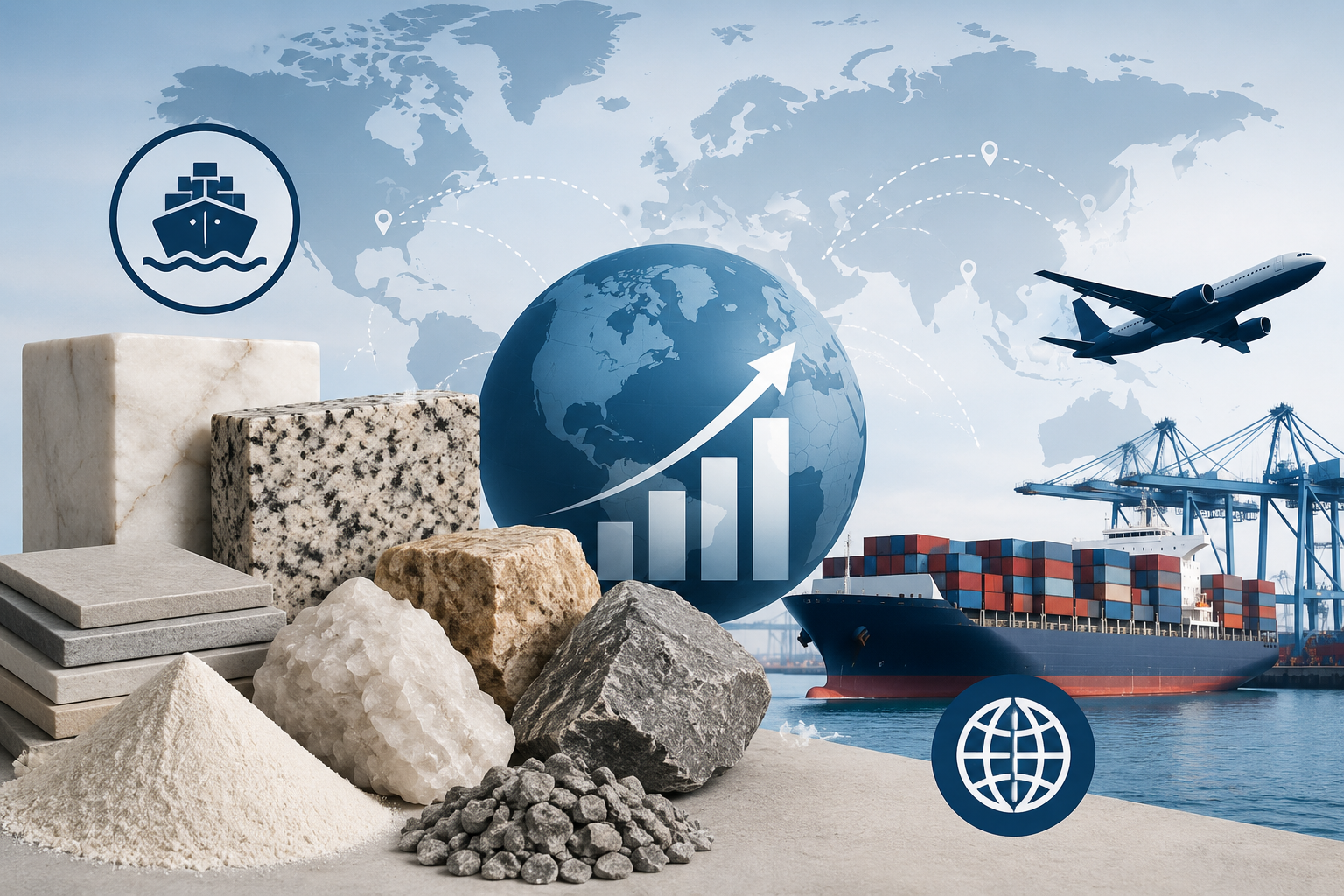
Mineral Products: A Complete Guide to Non-Metallic Mineral Export and Import
The global mineral product industry continues to play a critical role in manufacturing, construction, agriculture, ceramics, electronics, and infrastructure development. While metallic minerals often receive significant attention, non-metallic mineral products represent one of the fastest-growing segments in international trade.
Growing urbanization, renewable energy projects, industrial expansion, and infrastructure investments have increased demand for mineral products across Asia, Europe, the Middle East, and North America. Exporters and importers who understand market trends, quality standards, and supply chain requirements are better positioned to compete in international markets.
This guide explains the non-metallic mineral industry, major export opportunities, market trends, quality considerations, and practical strategies for businesses entering global trade.
Understanding Mineral Products
Mineral products are naturally occurring substances extracted from the earth and processed for commercial or industrial use.
They generally fall into two categories:
| Metallic Minerals | Non-Metallic Minerals |
| Iron Ore | Limestone |
| Copper | Gypsum |
| Bauxite | Quartz |
| Nickel | Feldspar |
| Zinc | Kaolin |
| Manganese | Talc |
| Chromium | Bentonite |
| Lead | Silica Sand |
Non-metallic minerals are widely used because they offer excellent durability, chemical stability, and cost efficiency.
What Are Non-Metallic Minerals?
Non-metallic minerals do not contain metals in commercially recoverable quantities. Instead, they are valued for their physical and chemical properties.
Common examples include:
- Limestone
- Quartz
- Dolomite
- Bentonite
- Kaolin
- Gypsum
- Talc
- Mica
- Feldspar
- Silica Sand
These materials serve hundreds of industries worldwide.
Major Applications of Mineral Products
Construction Industry
Construction remains the largest consumer of non-metallic minerals.
Applications include:
- Cement manufacturing
- Concrete production
- Roads
- Bridges
- Commercial buildings
- Residential housing
Glass Manufacturing
Quartz and silica sand are essential raw materials for producing:
- Float glass
- Solar panels
- Bottles
- Optical glass
Ceramics Industry
Kaolin, feldspar, and quartz are widely used in:
- Tiles
- Sanitary ware
- Porcelain
- Ceramic tableware
Agriculture
Mineral products improve soil quality and crop productivity.
Common applications include:
- Soil conditioners
- Fertilizers
- Animal feed additives
Paint and Chemical Industry
Minerals provide:
- Better texture
- Improved durability
- Brightness
- Chemical stability
Global Market Trends
The international mineral product market continues expanding due to several major developments.
Infrastructure Investments
Governments worldwide continue investing in:
- Smart cities
- Highways
- Airports
- Railways
- Ports
These projects require enormous quantities of limestone, gypsum, and aggregates.
Renewable Energy
Solar energy production has increased demand for:
- High-purity silica
- Quartz
- Industrial minerals
Electric Vehicle Manufacturing
Battery production, advanced ceramics, and electronic components require specialized mineral products.
Sustainable Mining
Buyers increasingly prefer suppliers that demonstrate:
- Responsible mining
- Environmental compliance
- Waste reduction
- Sustainable processing
Leading Exporting Countries
Several countries dominate the non-metallic mineral market.
These include:
- India
- China
- Australia
- Turkey
- Vietnam
- Brazil
- South Africa
India has become an important supplier due to its rich mineral reserves and competitive production costs.
Major Import Markets
Strong demand comes from:
- United States
- Germany
- United Kingdom
- Japan
- South Korea
- United Arab Emirates
- Saudi Arabia
- Singapore
These markets import mineral products for manufacturing, infrastructure, and industrial applications.
Quality Standards in Mineral Product Trade
International buyers expect strict quality compliance.
Important parameters include:
- Chemical composition
- Purity level
- Moisture content
- Particle size
- Whiteness
- Packaging quality
- Consistent supply
Exporters often provide laboratory test reports before shipment.
Packaging and Logistics
Proper packaging reduces damage during transportation.
Common packaging methods include:
- Jumbo bags
- PP woven bags
- Bulk containers
- Wooden pallets
- Moisture-resistant packaging
Reliable logistics partners help ensure timely international delivery.
Export Documentation
Exporters should prepare the following documents:
- Commercial Invoice
- Packing List
- Bill of Lading
- Certificate of Origin
- Export License (where applicable)
- Quality Inspection Report
- Insurance Certificate
Accurate documentation reduces customs delays.
Opportunities for New Exporters
Growing international demand creates opportunities for small and medium-sized businesses.
Potential strategies include:
- Specialize in one mineral product.
- Focus on high-quality processing.
- Build long-term buyer relationships.
- Participate in international trade fairs.
- Develop an informative business website.
- Publish technical product specifications.
- Maintain consistent product quality.
Challenges Facing the Industry
Although opportunities remain strong, exporters face several challenges.
Price Volatility
Mining costs, fuel prices, and freight charges affect profitability.
Environmental Regulations
Governments continue strengthening mining and environmental standards.
Supply Chain Disruptions
Shipping delays and container shortages occasionally impact deliveries.
Product Quality
International buyers demand consistent specifications across every shipment.
Comparison of Metallic and Non-Metallic Minerals
| Feature | Metallic Minerals | Non-Metallic Minerals |
| Metal Content | High | Low or None |
| Primary Use | Metal Production | Construction and Manufacturing |
| Processing | Smelting | Crushing, Grinding, Processing |
| Demand | Industrial | Construction, Agriculture, Ceramics |
| Examples | Iron, Copper | Quartz, Limestone, Gypsum |
Actionable Tips for Exporters
Businesses planning to enter the mineral product market should focus on:
- Research international demand before production.
- Understand import regulations of target countries.
- Invest in laboratory testing.
- Maintain product consistency.
- Build an export-ready website.
- Obtain required certifications.
- Respond quickly to buyer inquiries.
- Offer transparent pricing and documentation.
Industry Outlook
The outlook for mineral products remains positive.
Rapid urbanization, renewable energy expansion, manufacturing growth, and infrastructure development continue driving international demand.
Companies investing in sustainable mining, digital marketing, product quality, and supply chain efficiency are expected to gain stronger positions in the global marketplace.
Key Takeaways
- Non-metallic minerals remain essential for modern industries.
- Global demand continues growing across multiple sectors.
- Product quality is the biggest competitive advantage.
- Digital visibility helps exporters reach international buyers.
- Sustainable mining practices improve long-term business opportunities.
Conclusion
The mineral product industry offers significant opportunities for exporters and importers looking to expand in global markets. Non-metallic minerals support construction, manufacturing, agriculture, renewable energy, and advanced industrial applications, making them indispensable across multiple sectors.
Success in international trade depends on consistent product quality, compliance with global standards, reliable logistics, and strong digital visibility. Businesses that combine technical expertise with effective online marketing and customer-focused service are well positioned to build lasting relationships with buyers worldwide.
As global infrastructure investments and industrial development continue, demand for quality mineral products is expected to remain strong, creating new opportunities for suppliers committed to innovation, sustainability, and international trade excellence.
For mineral product export and import inquiries, contact: mbg11cucc@gmail.com
FAQs
1. What are non-metallic mineral products?
Non-metallic mineral products are naturally occurring minerals such as quartz, limestone, gypsum, feldspar, talc, kaolin, and silica sand that are used in construction, ceramics, agriculture, glass manufacturing, and industrial production.
2. Which countries import the most mineral products?
Major importing countries include the United States, Germany, Japan, South Korea, the United Arab Emirates, Saudi Arabia, Singapore, and the United Kingdom.
3. Why is product quality important in mineral exports?
International buyers require consistent purity, particle size, moisture levels, packaging quality, and compliance with industry standards to ensure reliable performance in manufacturing and industrial applications.
4. Which industries use non-metallic minerals?
Construction, glass manufacturing, ceramics, agriculture, paints, chemicals, electronics, renewable energy, and infrastructure projects all depend on non-metallic mineral products.
5. How can exporters find international buyers?
Exporters can attract buyers through SEO, LinkedIn networking, B2B marketplaces, participation in international trade exhibitions, industry publications, and maintaining a professional website with detailed product specifications.