

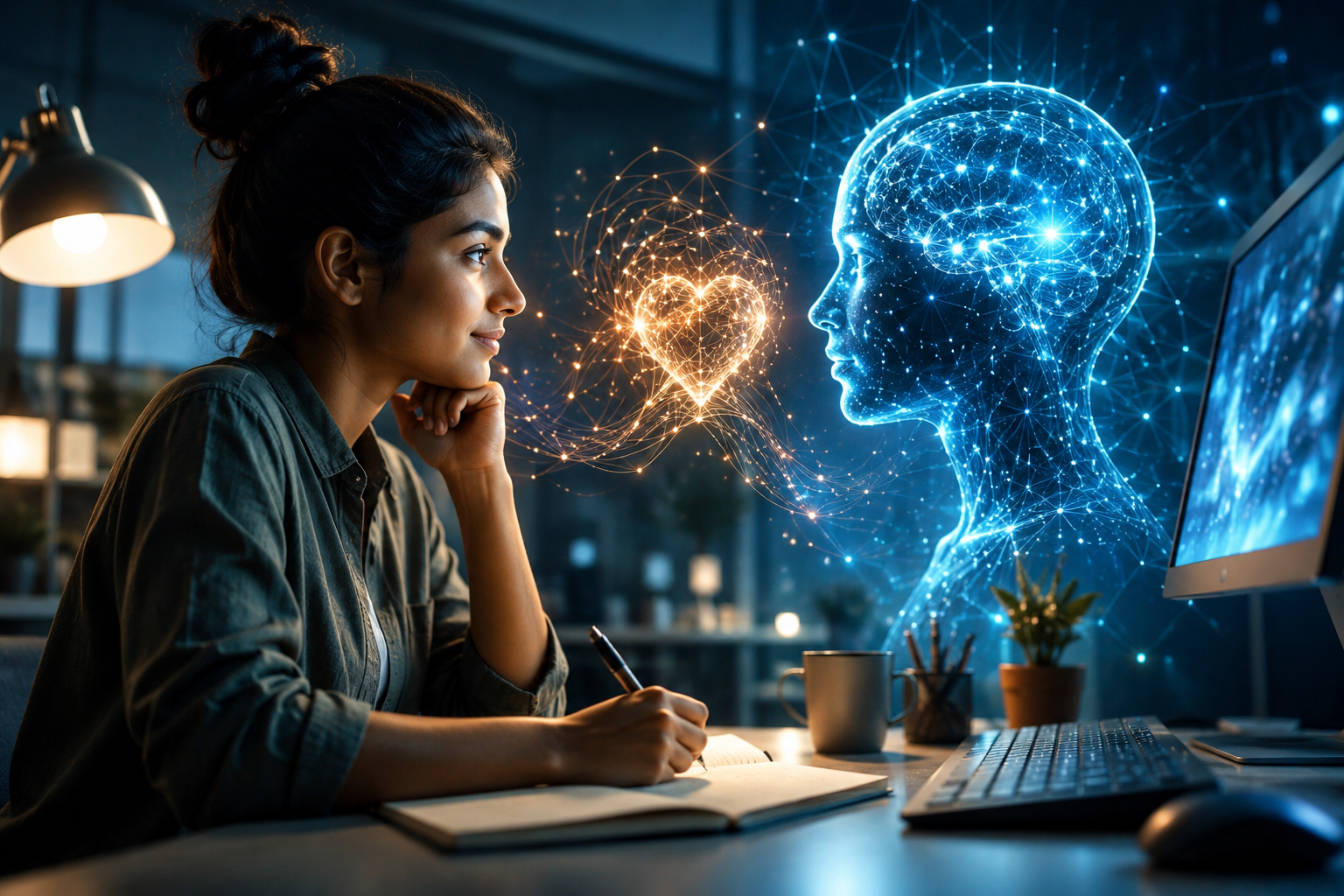
Artificial Intelligence (AI) is transforming the way businesses work. From automation tools to smart chatbots and data analysis systems, AI is helping companies save time, reduce costs, and improve productivity. But while technical skills are important, soft skills are becoming even more valuable in the AI-driven world.
Today, companies are not only looking for employees who can use AI tools but also for people who can communicate, solve problems, think creatively, and work in teams. This is why soft skills in AI-driven businesses are now considered one of the most important career assets for students, interns, and new learners.
In this article, you will learn why soft skills matter in the age of AI, which skills are most important, and how beginners can improve them for future career growth.
What Are Soft Skills?
Soft skills are personal qualities and behavioral abilities that help people work effectively with others. Unlike technical skills, soft skills are not about coding or software knowledge. They are about how you interact, communicate, and solve problems.
Examples of Soft Skills:
- Communication skills
- Teamwork
- Leadership
- Time management
- Problem-solving
- Emotional intelligence
- Creativity
- Adaptability
- Critical thinking
In the modern workplace, these skills help employees collaborate with AI systems and human teams efficiently.
Why Soft Skills Are Important in the AI Era
AI can automate repetitive tasks, analyze data, and even generate content. However, AI still cannot fully replace human emotions, creativity, ethical decision-making, and relationship-building abilities.
Businesses now need professionals who can:
- Understand customer emotions
- Make strategic decisions
- Lead teams
- Handle workplace conflicts
- Think creatively
- Adapt to rapid technological changes
This is where soft skills become powerful.
Human Skills vs AI Skills
AI is excellent at:
- Automation
- Data processing
- Pattern recognition
- Predictive analysis
Humans are excellent at:
- Empathy
- Creativity
- Communication
- Leadership
- Emotional understanding
The future workplace requires a combination of both.
Top Soft Skills Needed in AI-Driven Businesses
1. Communication Skills
Communication is one of the most demanded skills in every industry.
Even if AI tools generate reports or automate emails, employees still need to:
- Explain ideas clearly
- Present solutions
- Talk with clients
- Collaborate with teams
Good communication improves teamwork and customer satisfaction.
How Students Can Improve:
- Practice public speaking
- Join group discussions
- Improve writing skills
- Learn professional email communication
2. Critical Thinking
AI can provide data, but humans must decide how to use it.
Critical thinking helps professionals:
- Analyze situations
- Identify problems
- Make smart decisions
- Evaluate AI-generated results
Businesses value employees who can think independently instead of depending completely on AI tools.
Example:
If AI suggests a marketing strategy, a human marketer still needs to decide whether it matches customer behavior and business goals.
3. Emotional Intelligence
Emotional Intelligence (EQ) means understanding emotions—both your own and others’.
AI cannot fully understand human feelings or workplace relationships. That is why emotionally intelligent employees are highly valuable.
Emotional Intelligence Helps In:
- Managing stress
- Building relationships
- Handling criticism
- Team collaboration
- Customer support
Employees with strong EQ often become better leaders and managers.
4. Adaptability and Flexibility
Technology changes very quickly. Businesses constantly adopt new AI tools and digital systems.
Employees who can adapt to change easily are more successful in modern workplaces.
Why Adaptability Matters:
- AI tools update regularly
- Job roles are changing
- New technologies appear frequently
- Remote work culture is increasing
Students and interns should develop a mindset of continuous learning.
5. Creativity and Innovation
AI can generate ideas based on existing data, but true creativity still comes from human thinking.
Businesses need creative professionals for:
- Marketing campaigns
- Product design
- Problem-solving
- Branding
- Content creation
Creative thinking helps companies stay competitive in the market.
Ways to Improve Creativity:
- Read books
- Explore new ideas
- Practice brainstorming
- Work on creative projects
6. Leadership Skills
Leadership is not only for managers. Companies want employees who can:
- Take responsibility
- Motivate teams
- Solve conflicts
- Make decisions
AI can support leaders with data, but leadership itself remains a human skill.
Beginner Leadership Tips:
- Participate in group activities
- Volunteer for responsibilities
- Learn team management basics
- Improve confidence
7. Teamwork and Collaboration
Most companies work in teams, especially in hybrid and remote work environments.
AI tools may assist workflows, but collaboration between people is still necessary.
Strong Teamwork Includes:
- Respecting others’ opinions
- Sharing ideas
- Helping teammates
- Working toward common goals
Students can build teamwork skills through internships, college projects, and online communities.
How AI Is Changing Job Requirements
Earlier, businesses mainly focused on technical knowledge and degrees. Now, companies prefer candidates who combine technical understanding with strong soft skills.
Modern Hiring Trends:
- Employers prioritize communication skills
- Problem-solving is highly valued
- Emotional intelligence improves leadership potential
- Adaptability is essential for digital transformation
Even AI-related jobs require human-centered skills.
Soft Skills That AI Cannot Replace
Many people fear AI will replace jobs completely. However, several human abilities remain difficult for AI to copy.
Skills AI Cannot Fully Replace:
- Human empathy
- Ethical judgment
- Creativity
- Relationship-building
- Leadership
- Negotiation
- Cultural understanding
This means soft skills will continue to grow in importance.
Importance of Soft Skills for Students and Interns
Students and freshers often focus only on technical learning. But recruiters today look beyond academic marks.
Strong soft skills can help:
- Crack interviews
- Build confidence
- Improve networking
- Get internships
- Grow faster in careers
During Interviews:
Recruiters often judge:
- Communication style
- Confidence level
- Listening ability
- Problem-solving mindset
That is why soft skills are essential from the beginning of a career.
Best Ways to Improve Soft Skills
Improving soft skills takes practice and consistency.
1. Practice Communication Daily
Speak confidently with friends, teachers, and colleagues.
2. Join Group Activities
Participate in debates, seminars, or teamwork projects.
3. Learn Active Listening
Listen carefully before responding.
4. Take Online Courses
Many free platforms teach communication and leadership skills.
5. Read Books and Articles
Reading improves vocabulary, confidence, and thinking ability.
6. Work on Emotional Intelligence
Understand emotions and practice empathy.
7. Accept Feedback
Feedback helps improve personality and performance.
AI and Soft Skills Together Create Future-Proof Careers
The future does not belong only to AI experts. It belongs to people who can combine:
- Technical knowledge
- AI understanding
- Human-centered soft skills
Businesses need professionals who can work alongside AI, not compete against it.
Future-Proof Career Skills:
- AI literacy
- Communication
- Adaptability
- Creativity
- Leadership
- Emotional intelligence
Students who develop these abilities early will have better career opportunities.
Industries Where Soft Skills Are Highly Important
Soft skills are valuable in almost every industry.
Top Industries:
- Digital Marketing
- IT Services
- Healthcare
- Customer Support
- Sales
- Education
- Human Resources
- Finance
- Business Management
Even technical jobs now require collaboration and communication abilities.
The Role of Soft Skills in Remote Work
Remote and hybrid work environments are increasing globally.
In remote work, soft skills become even more important because employees must:
- Communicate clearly online
- Manage time effectively
- Stay self-motivated
- Collaborate virtually
AI tools support remote work, but human interaction still drives productivity.
Final Thoughts
AI is changing businesses rapidly, but soft skills remain the true foundation of professional success. While AI can automate tasks and improve efficiency, human qualities like communication, creativity, leadership, and emotional intelligence cannot be replaced easily.
For students, interns, and new learners, developing soft skills alongside technical knowledge is the smartest career strategy today.
The future workplace will reward people who can:
- Work with AI tools
- Think creatively
- Communicate effectively
- Solve problems intelligently
- Adapt quickly to change
If you start improving your soft skills today, you will be better prepared for tomorrow’s AI-powered world.
FAQs
1. Why are soft skills important in the AI era?
Soft skills are important because AI cannot fully replace human abilities like communication, creativity, empathy, and leadership.
2. Which soft skill is most important for students?
Communication skills are one of the most important soft skills because they help in interviews, teamwork, and career growth.
3. Can AI replace soft skills?
No, AI can automate tasks but cannot completely replace emotional intelligence, creativity, and human relationships.
4. How can beginners improve soft skills?
Beginners can improve soft skills through practice, group activities, reading, public speaking, and online learning.
5. Are soft skills important in technical jobs?
Yes, even technical jobs require teamwork, communication, and problem-solving skills in modern workplaces.